1
F A Mannan Omnis dolor repellendus Olimpedit quo minus Itaque earum rerum

Monday, June 23, 2014

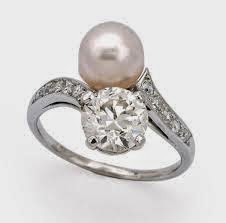
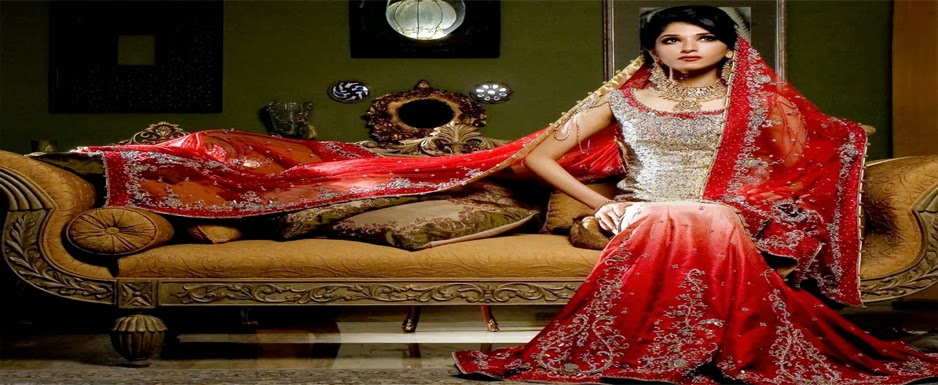
French Southern Pearl Diamond Wedding Bridal Fashion Jewelry.
By Aamir Mannan.

If science reveals the dazzling colours hidden in the pearls’ apparent whiteness, only history can explain their unique value. A grainy video reveals early 20th century divers descending to the bottom of the sea with no breathing equipment but for the air in their lungs. In its everyday simplicity, an old nose clip nearby is a poignant reminder of the dangers and delusions of their lives. Sitting on the deck with their skin hardened by salt, the fishermen would relentlessly open the hundreds of shells they had collected, rarely finding a pearl worth selling.


Born of sea-foam, pearls would join the international trade which travelled from Saudi Arabiato India, via Bahrain and Qatar. These strings were gathered in Bombay, only to break loose again, towards Europe and China. The pearl was a truly international craze, a theme which the V&A’s expansive collection is best suited to pursue. This is further emphasised through the fact that the exhibition is a collaboration with the Qatar Museum Authority. Thus, visitors encounter both the history of pearls and their cultural geography – from the Gulf’s seabed to the contemporary London museum.


Sunday, June 22, 2014

French Polynesia Pearl Diamond Wedding Bridal Fashion Jewelry.
By Aamir Mannan.

The exhibition’s portrayal of the history of pearls begins – perhaps too Eurocentrically – with the tradition of the ‘cabinet of curiosities,’ the encyclopaedic microcosms constructed by early modern princes and scholars. Reflecting man’s privileged place in God’s creation, the cabinets juxtaposed the creations of art and nature, with one always trying to outdo the other in a battle of conceits. Fished from the seas yet selected and mounted with matchless artistry, pearls captured the transition of human creation into divine nature. They were irresistible, as shown in Jeanne de Marigny’s portrait, where all attention goes to her pear-lined satin dress.

Installation image of 'Pearls' |  © Victoria and Albert Museum
Installation image of 'Pearls' | © Victoria and Albert Museum
Yet there is more to the ‘cabinet of curiosity’ than the wonders of 


17th century haute couture. Emphasised in the flimsy boundary between nature and culture, this first display sets the scene for scientific imagining. Again and again the exhibition uses the constructed languages of X-rays and microscopes to reveal what exactly is in the ‘nature’ of a pearl.


Saturday, June 21, 2014

French Guiana Pearl Diamond Fashion White Gold Wedding Jewelry.
By Aamir Mannan.

‘Pearls’ at London’s V&A: A History of Luxury and Design

On display from the 21st of September 2013 to the 19th of January 2014, Pearls is an exhibition at London’s Victoria Albert Museum that focuses on the history and design of pearls. Costanza Beltrami investigates this exhibition, revealing the fascinating story these sea-born treasures hold.

Installation image of 'Pearls'
Installation image of 'Pearls' | © Victoria and Albert Museum
The V&A’s fall exhibition is titled simply Pearls: no more is needed to evoke the most elegant of jewels. From the neck of our grandmothers to Audrey Hepburn’s Breakfast at Tiffany, pearls are truly timeless. Handed down from a generation to the next, they defy change with their candid sheen. Yet, for all its dreamy atmosphere, the V&A’s exhibition reveals that the most coveted of jewels has a long and adventurous history.


Friday, June 20, 2014

Faroe Islands Pearl Diamond Wedding Fashion Jewelry.
By Aamir Mannan.

Pearls were undoubtedly first discovered and appreciated in the East or the Orient, but where exactly in the Orient were they first discovered or, were they discovered and came to be appreciated in more than one place independent of one another possibly at different times or periods? The answer to this difficult question has to be sought by identifying the most ancient sources of pearls in the world, and obviously the first people who would have discovered and learnt to appreciate pearls were the people living along the shoreline of these sources. 


The most ancient sources of pearls in the world are believed to be the Persian Gulf, the Red Sea and the Gulf of Mannar between India and Sri Lanka. Pre-historic people living in these regions were probably the first to stumble upon the first pearls known to mankind, obviously during their quest for food. The fact that these were the same regions where some of the earliest human civilizations began, seem to consolidate the view that the discovery and appreciation of pearls also began in these regions. However, it may be difficult to pinpoint an exact region where the discovery and appreciation of pearls first began. It was quite possible that such discovery and appreciation began in the Persian 


Gulf/Red Sea region (the Middle East) and the Gulf of Mannar region (India and Sri Lanka), simultaneously or at different times independent of one another, just as much as the discovery and appreciation of pearls in the New World (the Americas and the Caribbean) had taken place independently of the Old World discoveries, long before Columbus discovered America. This webpage examines the archaeological and other evidences available that might establish the Persian Gulf/Red Sea region as the possible region where the discovery and appreciation of pearls first began. Evidences available to support the Gulf of Mannar region as another possible region where the discovery and appreciation of pearls first began, are considered separately on a different webpage dedicated for this purpose.

Thursday, June 19, 2014

Finland Pearl Diamond Wedding Fashion Gold Jewelry.
By Aamir Mannan.

In fact, the oldest piece of pearl jewelry on record is from the Persian Gulf region; a  2,500-3,000 year-old pearl necklace, made up of a triple row of 216  fairly well preserved pearls either from the late Elamite civilization or the Archemenid period that followed, dating back approximately to the 9th to 6th-century B.C. discovered in 1901 by archaeologist J. Morgan, in Susa, the capital of Elam, that was situated in the southwest of modern day Iran, in the province of Khuzestan, inside a bronze sarcophagus, belonging to a mummified body. This pearl necklace is a prominent exhibit in the Persian Gallery of the Louvre Museum in Paris. 


This is a significant archaeological discovery that shows the knowledge of pearls and their appreciation was widespread among the ancient people of Iran. More archeological evidence of the widespread use of pearls in ancient Iran would have been eliminated, as pearls being organic gems would not have withstood long periods of burial extending for thousands of years, unless they were protected in the secluded environment of a sarcophagus. However, even in the relative safety of a sarcophagus some of the pearls were in an advanced state of deterioration and just crumbled on contact reducing the number of pearls from the original estimated 400 to 500  to a mere 216

Wednesday, June 18, 2014

Fiji Pearl Diamond Fashion Jewelry. 
By Aamir Mannan.

The Persian Gulf/Red Sea region is believed to be the home of mankind's first civilization, the Sumerian civilization that arose on the banks of the rivers of Euphrates and Tigris in Mesopotamia, in the period 5,900 B.C - 2,350 B.C. popularly known as the "Cradle of Human Civilization." The Sumerian empires were followed by the Akkadian (2,350 B.C.-2,193 B.C.), Babylonian (2,004-1,600 B.C.) and Assyrian empires (2000-1800 B.C. and 1600-1200 B.C.). Some of the other ancient civilizations 


of this region were the Ancient Egyptian Civilization (3,200-1,000 B.C.), Ancient Iranian - Elamite Civilization (3,200-539 B.C.), and the Ancient Anatolian Civilization (2,500-700 B.C.). Archaeological evidence from this region such as jewelry found inside sarcophagi, ancient sculptures, coins etc point to the ancient use of pearls as ornaments in this region. Such evidences are however scarce given the organic origin of pearls, that could not withstand the ravages caused by burial for long periods of time.

Monday, June 16, 2014

Falkland Islands Pearl Diamond Wedding Fashion Jewelry.
By Aamir Mannan.

The Israelites were probably acquainted with pearls, but it is contentious whether the word pearl is mentioned in the Hebrew Bible (Tanakh), referred to as the Old Testament by Christians. Some of the words mentioned in the Tanakh, that are argued by some to mean pearls are "peninim," "ra'mot," "netofot," "shoham" and "gabish."


"Peninim" and "ramot" are objects of great costliness, taken to mean pearls. "Peninim" as appearing in Lam.iv.7 is taken by some authorities to indicate objects whose color is red, probably red pearls. However, others consider the two words actually refer to red corals or red rubies. The word "Netifot" mentioned in Judges.viii.26 and Isa.iii.19 may not mean pearls, but is still used in Esth.i.6, where it is some versions are translated as pearls, because the corresponding Arabic word denotes pearls. In Job.xxviii.18 the value of wisdom is compared with the value of "gabish." Some authorities believe the word "gabish" refers to pearls, while others think it refers to rock crystal. The word "shoham" stones in Gen.ii.12 is also believed to indicate pearls.


Friday, June 13, 2014

Ethiopia Pearl Diamond Women Wedding Fashion Jewelry.
By Aamir Mannan.
A Rabbinical story in which Patriarch Abraham attempts to hide Sarah in a chest, so that foreign eyes might not behold her beauty, at the time they entered Egypt, serves to highlight the value placed on pearls by ancient Hebrews at that time. When they reached the point at which they were to pay custom dues, the officers requested Abraham to pay the dues on the goods carried by him, without caring to open the chest. When told that he was surely carrying clothes with him, Abraham acknowledged and said that he would pay the dues on them. When the officers questioned Abraham whether he carried gold, fine silk and pearls with him he 

acknowledged every one of them and agreed to pay tax on them. This aroused the suspicion of the custom officers, who ordered Abraham to open the chest, and as the story goes the chest was opened, and the land was illumined by the luster of Sarah's beauty.
In the story above, the items about which the custom officers questioned Abraham, clothes, gold, fine silk and pearls, showed an increasing gradation in value, according to market values obtaining at that time. Pearls were the most valued of all items at that time, and was the last question posed to Abraham. The stunned custom officers were actually keen in finding out what Abraham carried inside the chest that was more valuable than pearls !

Thursday, June 12, 2014

Estonia Pearl Diamond Bridal Fashion Jewelry.
 By Aamir Mannan.
The Talmud, the sacred text of mainstream Judaism, make frequent references to pearls, as signifying something extraordinarily beautiful and very costly. Some examples of these references are :- "The coats which God had made for Adam and Eve were as beautiful as pearls"(Gen R xx 12); "The manna was as white as a pearl" (Yoma 75a); "A pearl that is worth thousands of zuzim" (Bava Batra 146a); "A pearl that has no price" (Yerushalami ix 12d); "The pearl is one of the things the purchase of which is not subject to the laws of Ona'ah, for the reason that the value of two matched pearls greatly exceeded the value of each one separately, (Bava Metzia iv 8, ib Gemara 58b).
One of the references, however, considers pearls to be inferior to precious stones (Ab. Zarah 8b). Pearls are compared to drops in one reference. "Oil remained on Aaron's beard like two pearl-drops" (Hor 12a). This is an obvious reference to drop-shaped pearls like the ones used in pendant earrings. The term "pearl" is used metaphorically to denote any valuable thing, eg. a good slave (Kid. 18a), or a halakah, or any reasonable interpretation, (Hag. 3a and 

Wednesday, June 11, 2014

Eritrea Pearl Diamond Fashion Wedding Jewelry. 
By Aamir Mannan.

The most ancient reference to pearls comes from ancient China. In one of the oldest of books published in China, known as Sho King (Chuang Tzu) dating from 2,350 B.C. (4,350 B.P.) mention is made of a pearl from the River Huai, the natural boundary between north China and south China, being given as a tribute to Emperor Yu in 2206 B.C. (4,206 B.P.), and a string of near-spherical pearls from the province of King Kau also given as tribute. The book also mentions of pearls in tax records and of pearl rewards after death. An interesting Confucian ode, "If in life you gave no alms, In death how do you deserve a pearl?" is mentioned in this book. The ode is an exhortation to give charity to the poor, so that you can be rewarded in life after death. The ancient Chinese dictionary, the Nh'ya, published in 1,000 B.C. (3,000 B.P.) refer to pearls as precious jewels found in the province of Shen-


Si on the western frontier. China also gets the credit for the production of the first cultured pearls around the year 1,000 A.D. by inserting tiny lead Buddhas into freshwater mollusks  which was coated with mother-of-pearl, producing pearl Buddhas in a period of 1-2 years. Such pearl-coated Buddhas had special spiritual significance for the Chinese Buddhists.

Tuesday, June 10, 2014

Equatorial Guinea Pearl Diamond Fashion Jewelry.
 By Aamir Mannan.

The oldest sacred books of the Hindus known as the "Vedas," written in Sanskrit, contain many references to pearls. The "Rigveda"  the oldest of the "Vedas" originating in northwestern India 1,700-1,100 B.C. (3,700-3,300 B.P.) uses the word "krisana" in many verses, which is generally translated as signifying pearls. The "Atharvaveda" written around 1200-1,000 B.C. (3,200-3,000 B.P.) refers to an amulet made of pearls, and used as a talisman. References to pearls are also found in the two great epics of ancient India, the Ramayana, the ancient Sanskrit epic ascribed to the 


Hindu sage Valmiki, probably originating in the 5th-century B.C (2,500 B.P.); and the Mahabaratha, the Sanskrit philosophical/historic epic of the 4th-century B.C. (2,400 B.P.) attributed to Vyasa. Hindu Literature associates the pearl with Krishna, the 8th-incarnation of Vishnu, the most popular God of Hindu worship, who is believed to have retrieved pearls from the depths of th
e sea to adorn his daughter on the day of her wedding. The renowned classical Sanskrit writer, of the 4th or 5th century A.D. widely regarded as the greatest poet and dramatist in the Sanskrit Language, commonly known as the Hindu Shakespeare but preceded William Shakespeare by 12 centuries, makes frequent reference to pearls in his works, which he called "muktha" meaning "pure."

Monday, June 9, 2014

El Salvador Pearl Diamond Fashion Jewelry.

By Aamir Mannan.

History of the Discovery and Appreciation of Pearls - the Organic Gem Perfected by Nature - Page 1

Pearls are Organic Gemstones Perfected by Nature and Possessing Unique Optical Properties that Cannot be Replicated by Human Intervention

Pearls are organic gems produced by Mollusks such as bivalves (oysters, mussels, clams, scallops etc.) and gastropods (sea snails like melo melo sea snail, queen conch, horse conch, abalone sea snail etc), considered as gifts of nature, that come ready-made, already perfected by nature, not requiring human intervention such as cutting and polishing, and possessing a luster and brilliance as in nacreous pearls, that sometimes exceeds such properties, created by man in inorganic gemstones using modern technical skills and innovations; and possessing unique optical properties such as orient and overtones, caused by the refraction of light as it passes through successive layers of nacre, giving rise to unique color combinations, that is not found in any inorganic gemstone including diamonds, and that cannot be replicated by human intervention.

Pearls were Perhaps the First Gemstones Discovered and Appreciated by Pre-historic Man

Being ready-made gems that come perfect from the hands of nature, pearls were perhaps the first gemstones discovered by ancient  and pre-historic man, during his perennial quest for food, one of early man's pre-occupations as a food gatherer. Having made the discovery that freshwater mussels and saltwater oysters were ideal sources of food, ancient man collected them by the thousands from  the rivers and the sea. In the process of shucking these mussels and oysters ancient man would have stumbled upon the first pearls, with their beautiful luster and brilliance, which he came to like and appreciate for their beauty. Had the pearls been rough, and dull in appearance they would not have captured his attention, and like other inorganic gemstones such as diamonds, emeralds, rubies, sapphires, etc. pearls would have waited for several millennia more until man's cultural evolution would have progressed to that extent, enabling cutting and polishing to reveal their beauty.


Further, by experience pre-historic man would also have learnt that pearls were not found in all oysters and were elusive and extremely rare, found just in a few oysters out of thousands of oysters shucked. Such extreme rarity would have naturally instilled in ancient man an admiration and awe for these elusive creations of nature, to which he ascribed  a spiritual provenance, fit only to be adorned by members of the royalty and nobility, who were considered as agents of the creator on earth. Pearls and the more easily obtainable mother-of-pearl shells were among the first materials of adornment incorporated into items of jewelry by ancient man. However, the use of pearls in adornments evolved simultaneously with ancient man's ability to drill various materials, both of organic and inorganic origin and convert them into beads.


Sunday, June 8, 2014

Egypt Pearl Diamond Fashion Jewelry. 
By Aamir Mannan.

We know that in ancient civilizations, long before recorded history, people adorned themselves with seashells and beads made from seashells. Therefore it is not surprising that the earliest use of mother of pearl in jewelry occurred in Egypt, about 5,200 years ago. Mother of pearl was used to make cartouches and beads. There are rare examples of pearls in the paintings and statuary of these eras in ancient Egypt, but pearls themselves appear to have been uncommon in these ancient dynasties.


Pearl History of China

China claims the earliest mention of pearls in their historical texts, about 4,000 years ago. Mentioned specifically were freshwater pearls from the river Hwai and the province of King Hau; these were described as "not quite round", which is still a common description of freshwater pearls! Chinese history mentions freshwater pearls in connection with many other ponds and rivers in China. There are also mentions of sea pearls from Cochin, China as well as Japan.
Related Articles and Forum Threads

:

- Pearls in History
- Famous Pearls
- More Famous Pearls
- William Sawville-Kent
- The Pearl Exhibition in Paris
- Matarban Gulf Burmese Pearls
- Carl Linnaeaus and the Cultured Pearl
Pearl History of India

India has a long and glorious history of appreciating pearls. About 3,000 years ago, pearls were mentioned in the Rigveda, the oldest of the Vedas. Around 2,500 years ago, the Atharaveda mentions an amulet made of pearls and used as a talisman. The ancient epic poem, the Ramayana, describes a necklace made with 27 pearls. Imagine the classic 16-inch necklace of about 9-11mm pearls - these would have been spectacular pearls! The god Krishna is also associated with pearls in important stories.

Saturday, June 7, 2014

Ecuador Pearl Diamond Fashion Jewelry.
By Aamir Mannan. 

During the pre-Inca period, people lived in clans, which formed great tribes, some allied with each other to form powerful confederations, as the Confederation of Quito. But none of these confederations could resist the formidable momentum of the Tawantinsuyu. The invasion of the Inca in the 15th century was very painful and bloody. However, once occupied by the Quito hosts of Huayna Capac (1593–1595), the Incas developed an extensive administration and began the colonization of the region. The pre-Columbian era can be divided up into four eras: the Preceramic Period, the Formative Period, the Period of Regional Development, and the Period of Integration and the Arrival of the Incas.


The Preceramic period begins with the end of the first ice age and continues through 4200BC. The Las Vegas culture and The Inga Cultures dominated this period. The Las Vegas culture lived on the Santa Elena Peninsula on coast of Ecuador between 9,000-6,000 bc. The earliest people were hunter-gathers and fisherman. Approximately 6,000 bc the culture were among the first to begin farming.[1] The Inga lived in the Sierra near present-day Quito between 9000 and 8000 BC along an ancient trade route.[2]

Chorrera Figurine

During the Formative Period, people of the region moved from the hunter-gather a simple farming into a more developed society, with permanent developments, an increase in agriculture and the use of ceramics. New cultures included the Machalilla culture, Valdivia, Chorrera in the coast; Cotocollao, The Chimba in the sierra; and Pastaza, Chiguaza in the oriental region. The Valdivia culture is the first culture where significant remains have been discovered. Their civilization dates back as early as 3500 B.C. Living in the area near The Valdivias, they were the first Americans to use pottery. They navigated the seas and established a trade network with tribes in the

Thursday, June 5, 2014

East Timor Pearl Fashion Diamond Jewelry.
By Aamir Mannan.

The architect of a Broome-based Timorese maritime training program claims WA pearl producer Clipper Pearls has exposed cadets to "extreme and unsafe" working conditions at sea, resulting in fatigue, sickness and injury.


In 2010, Timor-Leste Australia Development Facility chief executive Kevin Austin partnered Clipper Pearls to train 16 Timorese to become pearl divers and deckhands over two years under Australian employment and safety conditions.


A joint pilot program of the Australian and East Timorese governments, it was the first time foreigners had been allowed to do paid training in a primary industry in WA, using stream three of the 442 visa scheme.

Mr Austin has demanded an investigation into the safety and self-regulation of WA's $200 million pearling industry, claiming the Timorese were asked to meet excessive production targets.


He claims the cadets were forced to lift heavy double pearl shell panels that Australians had refused to lift for safety reasons.

He also claims the cadets' meals were delayed and work hours extended, resulting in sickness, injury and fatigue.

Mr Austin said Clipper Pearls had refused his requests to introduce critical safety measures, including standard operating procedures and checklists for duties at sea.


Complaints to Clipper Pearls' parent company, Autore Pearls, had resulted in the partnership being terminated.

Wednesday, June 4, 2014

Dominican Republic Pearl Diamond Jewelry.
 By Aamir Mannan.

ALL NATURAL BEAUTY

Conch pearls are such rare and unique gems they can be far more expensive than any other natural pearls. Technically speaking, they are not true pearls, as these may be described as 'nacreous encrusted foreign bodies'. Instead, they are calcareous concretions formed inside the animal's flesh in response to tiny holes drilled in the shell by marine worms. Moreover, they are not easy to find; although the ratio in the wild of one pearl in ten thousand shells is widely regarded as true, recent studies suggest it may be as many as one in a thousand. Still very few, specially taking into account that only one out of ten such pearls reaches 'gem status'. This adds to their rarity and high value. Unlike nacreous 

pearls, which have been cultured since the 1920s, a method for culturing conch pearls has been developped very recently by scientists from Florida Atlantic University's Harbor Branch Oceanographic Institute (HBOI).The research team claims be able to produce both nucleated and non-nucleated pearls. Further information should be available soon.
Although the spiral shell of the Queen Conch was used by some pre-Colombian cultures as a ceremonial music instrument, there are no historic records of the use of its pearls in jewelry before the mid 1800s. 


The subtle yet lively touch of pink blush of a pink conch pearl can enhance platinum jewelry like no other gem. Edwardian designers of the late 19th century were quite aware of this, and Art Nouveau jewelers of the early 20th century incorporated them gracefully in their nature-inspired pieces.After World War I, the interest in conch pearls totally decreased and it was not until the 1980s that they regained the attention of designers. In 1987, Elizabeth Taylor endorsed Harry Winston's jewelry by wearing a conch pearl necklace and earring suite.

Monday, June 2, 2014

 Dominica Pearl Diamond Fashion Jewelry.
By Aamir Mannan. 

Amber, a fossil resin, is one of the few substances aside from diamond, jet, pearl and ivory that is considered a gem but is not a mineral. It was formed when sap emitted from trees dried up and hardened. The sap could have come out of the tree bark in a single drip, a large amount could have flowed out at one time or it could have come out several drips, one after another. The later method of multiple drops is known as shlaubs and generally has more fossil inclusions because the initial drops would catch the insects or animals and the subsequent drops would naturally cover them.


Nowhere in the world can it be found with the VARIETY OF COLORS same density as in the Dominican Republic. Actually, a large percentage of the amber used in commercial jewelry production comes from the Dominican Republic. Due to the year round warm climate, the amber found in the Dominican Republic also has a higher concentration of fossils and insects than anywhere else in the world. This makes it highly sought after by collectors and scientists alike.


There are three main amber mining sites in the Dominican Republic located in the northeast and southeast. They are the Cordillera Septentrional in the north (Santiago and Puerto Plata provinces, and Bayaguana and Sabena in the east. Amber, it has been determined, in the DR is primarily located at elevations that run over faults. Although it is theorized that these places had once been part of the same sedimentary basin but had been separated by movements along major faults, the amber was formed differently in the Septentrional range than in the hills of Bayaguana and Sabena. In the north, it was formed by caustic rocks or sandstone accumulating in deep water and in the east it is found in sand, clay or gravel.


Sunday, June 1, 2014

Djibouti Pearl Diamond Fashion Jewelry.
By Aamir Mannan. 

The V&A’s fall exhibition is titled simply Pearls: no more is needed to evoke the most elegant of jewels. From the neck of our grandmothers to Audrey Hepburn’s Breakfast at Tiffany, pearls are truly timeless. Handed down from a generation to the next, they defy change with their candid sheen. Yet, for all its dreamy atmosphere, the V&A’s exhibition reveals that the most coveted of jewels has a long and adventurous history.


The exhibition’s portrayal of the history of pearls begins – perhaps too Eurocentrically – with the tradition of the ‘cabinet of curiosities,’ the encyclopaedic microcosms constructed by early modern princes and scholars. Reflecting man’s privileged place in God’s creation, the cabinets juxtaposed the creations of art and nature, with one always trying to outdo the other in a battle of conceits. Fished from the seas yet selected and mounted with matchless artistry, pearls captured the transition of human creation into divine
Denmark Pearl Diamond Fashion Jewelry.
By Aamir Mannan. 

In the webpage dealing with the "History of the Discovery and Appreciation of Pearls - the Organic Gem Perfected by Nature - Page 1" it was shown without any ambiguity that pearls were first discovered and came to be appreciated in the East or the Orient. Several lines of evidence, both historical and archaeological  were presented that consolidated this view, the most significant among which was the fact that historically the most ancient sources of pearls in the world, such as the Persian Gulf, the Red Sea and the Gulf of Mannar, were the same regions where some of the earliest human civilizations began, such as the ancient Sumerian 


civilization of Mesopotamia, "the cradle of human civilization" and the ancient Egyptian civilization. It appears that the discovery and appreciation of pearls went hand-in-hand with the development of ancient human civilizations. The oldest pearls identified in the Persian Gulf region, a single pierced-pearl and mother-of-pearl artifacts comes from As-Sabiyah, Kuwait, dating back to the late stone age, 6,000-5,000 B.C.E. (7,000-8,000 B.P.). Another solitary pearl belonging to the same period was found among human remains at a site in Umm al-Quwain. A third single pierced-pearl near a female 


chin and mother-of-pearl pendants dating back to 5,200-4,200 B.C.E. (7,200-6,200 B.P.) was recovered from a site in Jebel al-Buhais, in Sharjah. Other ancient pearls ranging in age from 4,000-1,000 B.C.E. (6,000-3,000 B.P.) were also discovered from sites in Oman, Iraq, Bahrain, Iran, Kuwait and Palestine. These areas where the discoveries were made were part of the ancient Sumerian (5,900-2,350 B.C.), Akkadian (2,350-2,193 B.C.),  Babylonian (2,100-1,600 B.C.) or Assyrian empires (2,000-1,800 B.C.). and the age of the pearl or pearl jewelry discovered roughly coincide with the period of these ancient civilizations. Burial of people with a pierced pearl in their right hands appear to be a common custom prevalent during these ancient periods. Thus, without any doubt the Persian Gulf region, appears to be one of
Ammir Mannan. Powered by Blogger.

Followers

About Us

Spice Mag - Premium free blogger template developed by spicytricks.com.

Lorem ipsum dolor sit amet, consectetur adipiscing elit. Maecenas hendrerit iaculis nunc. Curabitur in eros ipsum. Pellentesque habitant morbi tristique senectus et netus et malesuada fames ac turpis egestas. Duis at mi justo, non suscipit elit. Nunc aliquam luctus adipiscing. Nullam sit amet lacus vitae odio congue mollis eu non magna. Duis sed arcu a libero adipiscing rhoncus. Aliquam erat volutpat. Suspendisse sed nunc metus, sed aliquet arcu.